Can't log in? Here's why, and the fix
Custom Quote

Welcome back

Log in to track orders, reorder in a click, and save your addresses.

Forgot password?
New to Greenerprinter?
Greenerprinter
Custom Quote
1-800-655-5833
Home Paper Guide Manufacturing Process

Our sustainable paper manufacturing process.

Making a positive impact with recycled paper.

Our paper manufacturing process meets the highest environmental standards, while delivering high-quality products. Our production processes, which focus on minimizing water usage, energy usage and waste, begin with fiber sourcing and fiber recovery from Sustana Fiber.

From old paper to fresh fiber.

Fiber recovery at the Sustana Fibers facility runs old paper through thirteen chlorine-free stages, recovering clean recycled pulp with minimal water, energy and waste.

Pulping 01
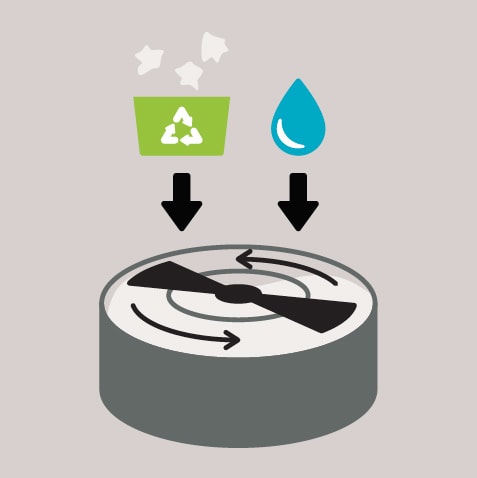
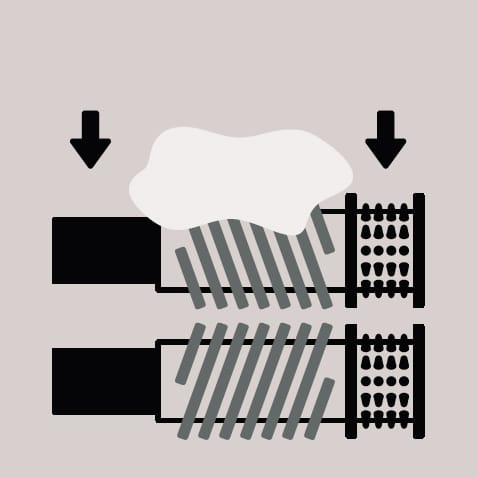
Pulping

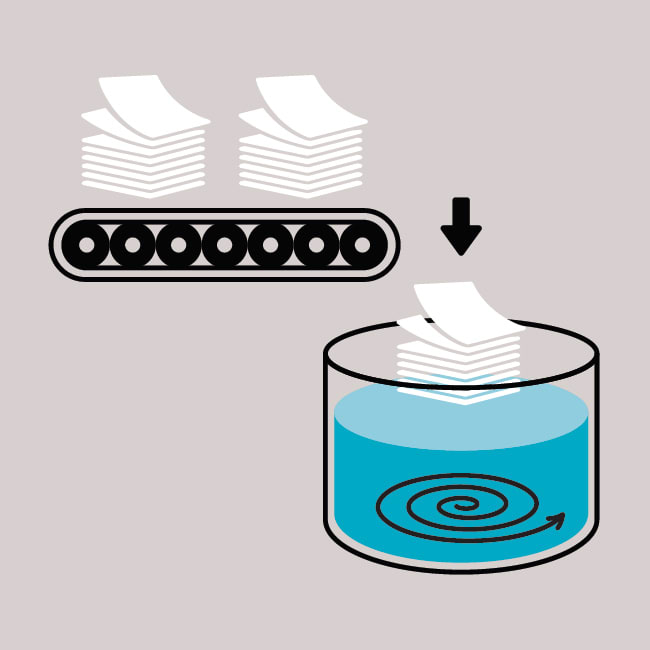
Preparation of coarse pulp by mixing old papers with water and breaking them up using the pulper's powerful agitator.

Screening 02
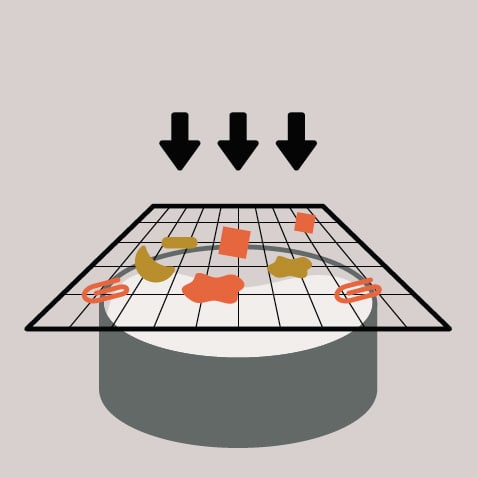
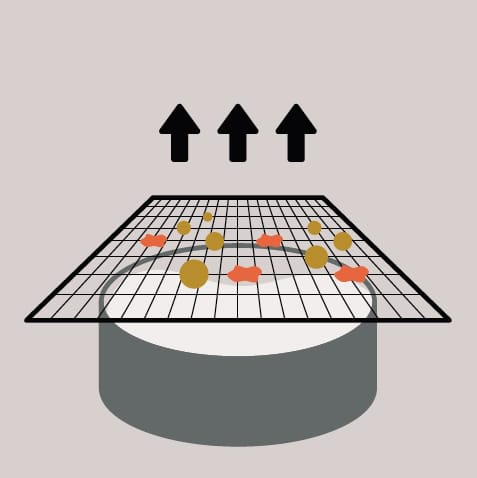
Screening

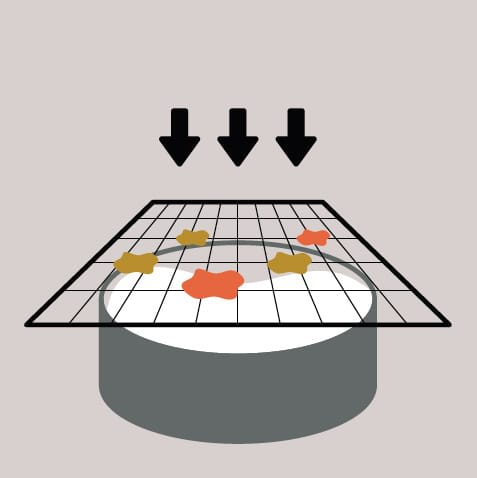
The pulp is pushed through the screen to remove solid impurities such as staples and glue.

Washing 03
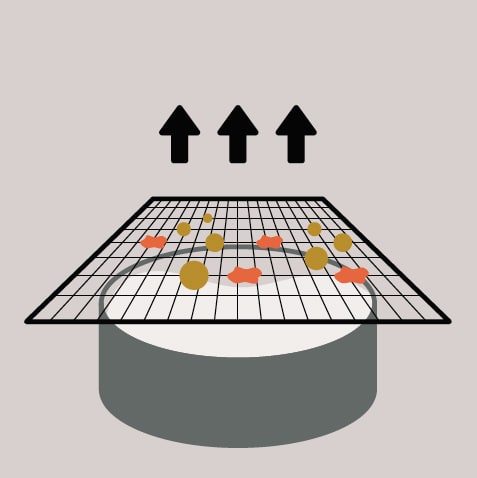
Washing

Visible dirt and glue residue in the water are removed.

Dispersion 04
Dispersion

Ink particles are removed by rubbing fibers together.

Flotation 05
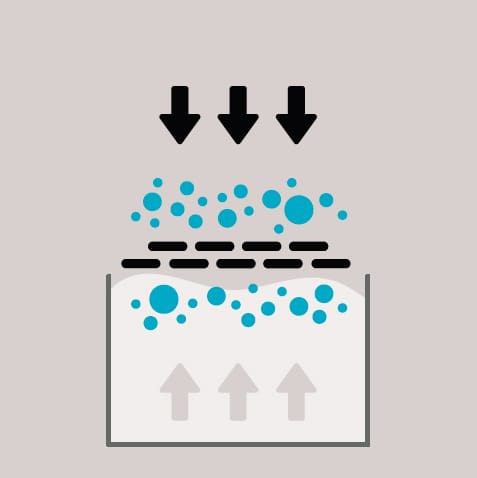
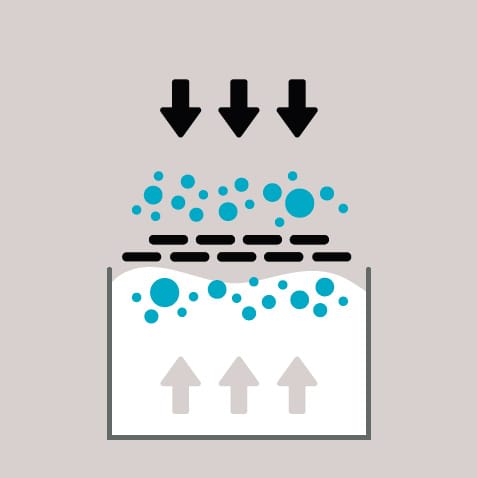
Flotation

Fine soapy bubbles are added to the pulp to bring ink particles to the surface.

2nd washing 06
2nd washing

Removal of small water impurities that were set apart from pulp in previous stages.

2nd dispersion 07
2nd dispersion

Release of remaining dye particles with fiber-on-fiber friction wear.

Bleaching 08
Bleaching

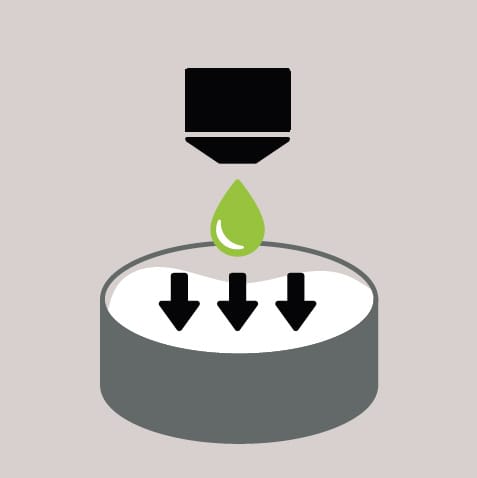
The pulp is bleached using hydrogen peroxide, a non-chlorinated component that is environmentally friendly.

2nd flotation 09
2nd flotation

Fine soapy bubbles are added to the pulp to bring residual ink particles to the surface.

Cleaning 10
Cleaning

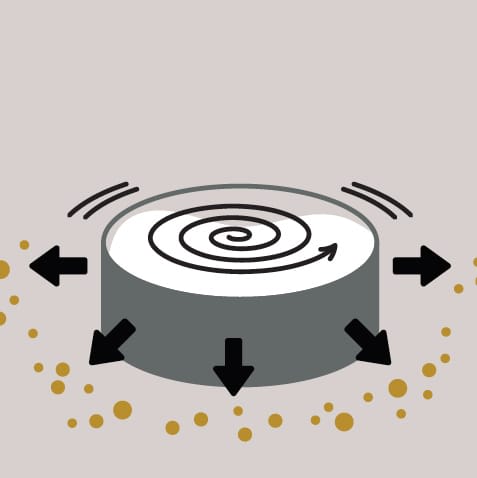
The pulp is put through cleaners, which use centrifugal force to separate the impurities from the pulp.

2nd bleaching 11
2nd bleaching

In this second phase of chlorine-free bleaching, the degree of whiteness of the pulp increases and any remaining coloring is removed.

2nd screening 12
2nd screening

The pulp is pushed through the screen to remove residual sticky particles.

Baling 13
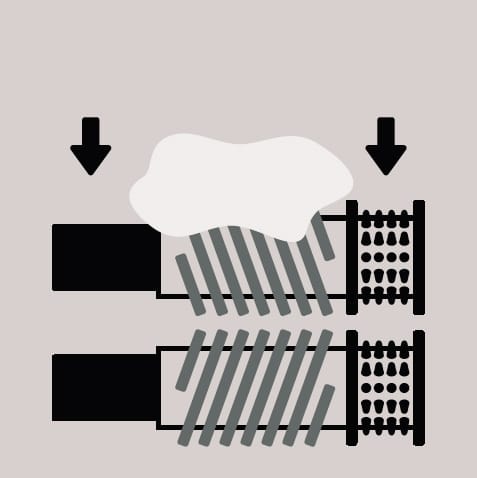
Baling

Thickening the pulp by dewatering, sheeting, cutting and baling.

Sustainable paper manufacturing.

Recovered pulp becomes finished sheets on the Rolland paper machine, from preparation through forming and drying.

Pulp preparation
Stage 1 of 3

Pulp preparation

1. Disintegration

The pulp is mixed with water to a consistency of approximately 8% fiber and 92% water. Additives are then added to define the opacity, brightness and color of the paper.

2. Refining

To avoid build-up accumulation, refining separates fibers from each other, which are mixed and stirred in a large vat in order to obtain a completely uniform pulp.

3. Screening and treatment

The screening and treatment phase removes all debris and agglomerations from the pulp to improve fiber dispersion.

Paper machine
Stage 2 of 3

Paper machine

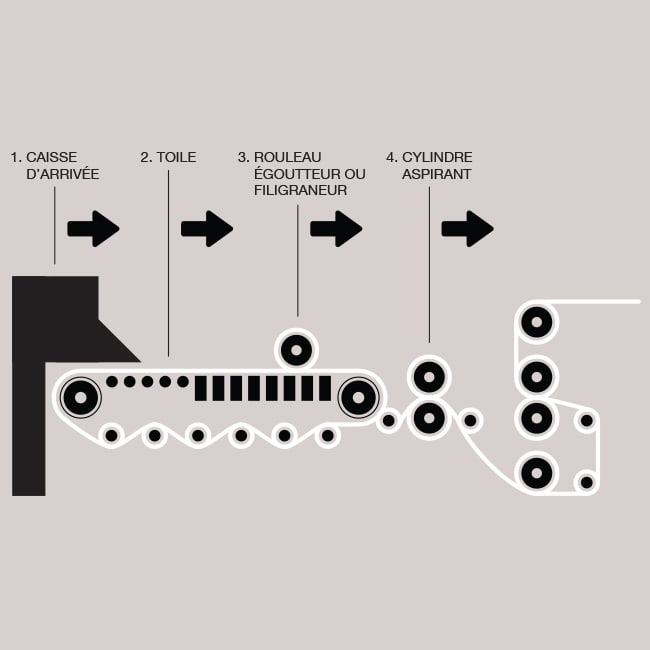
1. Head box

A constant amount of pulp is pumped evenly, across the machine's width, from the head box onto the wire.

2. Wire

A woven mesh made from synthetic filaments permits water drainage from the pulp through gravitational pull, thereby allowing the fibers to settle properly to form a wet sheet.

3. Forming or dandy roll

A mesh covered roll that pierces air bubbles that may have formed and improves the sheet formation. The forming roll can be replaced by a dandy roll with a pattern used to make a watermark on the paper.

Suction roll and felt

The paper passes through a suction roll in order to remove as much water as possible before arriving at the felt section to start the drying stage. At that time, the sheet contains approximately 50 to 60% humidity and moisture.

Drying
Stage 3 of 3

Drying

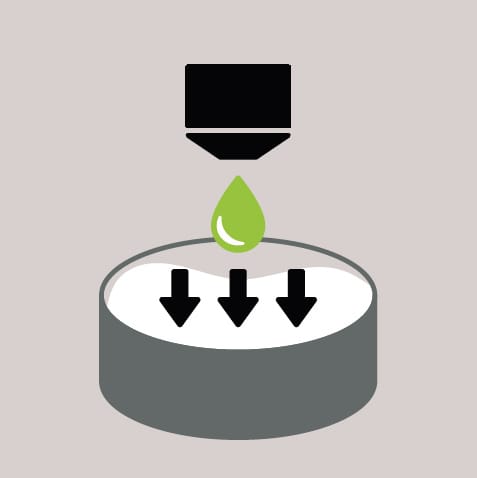
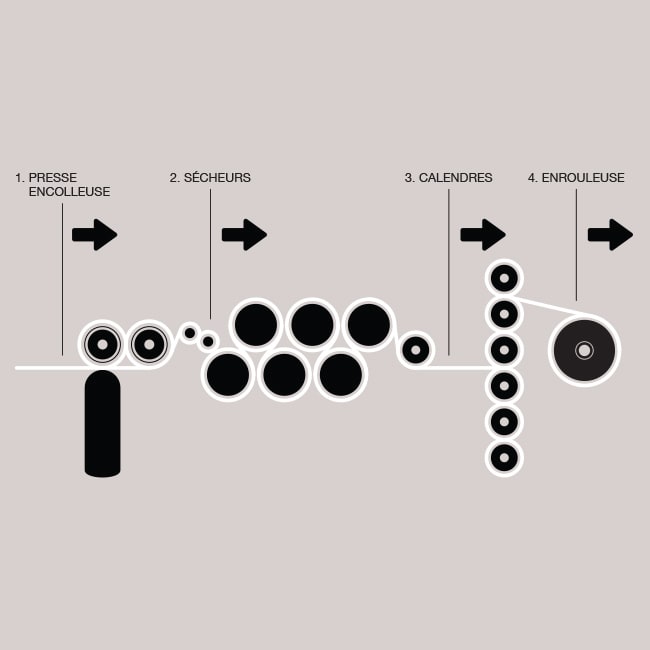
1. Size press

The size press applies a light film and continuous starch on both sides of the sheet. This treatment hardens the paper's surface and fixes the fibers so that the sheet is able to resist penetration of liquid inks.

2. Dryers

The paper passes through a series of steam-heated cylinders shaped like an accordion. The evaporation rate is constant and increases rapidly from one cylinder to another.

3. Calenders

Calendering determines the finish of the paper. The sheet passes through two adjacent rollers which rotate to smooth and compress in the same way on both sides.

4. Winder

The paper is wrapped on a wide metal mandrel to create a master roll, which is then transferred to a jumbo roll using a crane for the winding step. The master roll is held and then cut into strips according to the needed width, to then be finally wound onto cardboard cores.

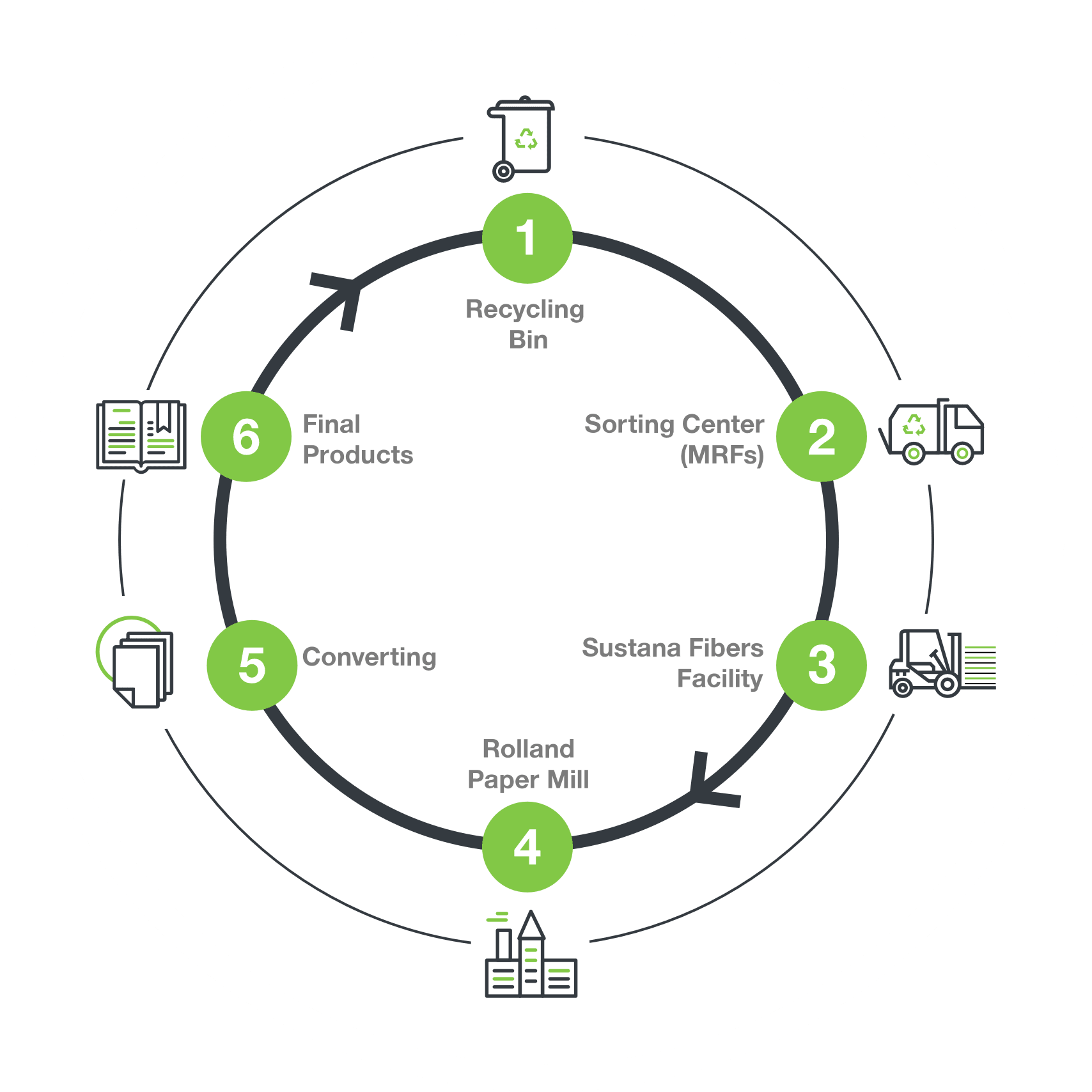
Sustana, bringing paper products full circle with sustainable innovation.

Wondering what happens to paper after it's recycled? We see waste paper as a valuable resource. Learn more about how our sustainable fiber process makes us a unique sustainable commercial paper producer.

The closed-loop recycling process: recycling bin, sorting center, Sustana Fibers facility, Rolland paper mill, converting, final products